
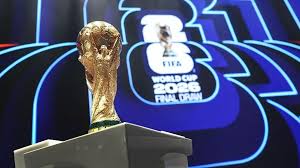
The 2026 FIFA World Cup was sold to supporters as a once-in-a-generation party on familiar turf: big cities, short flights, and the kind of festival atmosphere North America can stage at scale. Yet as the tournament edges closer, a different story has grabbed the headlines. Not tactics, not team selection, but the cost of simply getting through the turnstiles, with many fans staring at eye-watering figures and asking whether football’s biggest month has drifted into luxury territory.
The frustration is not hard to understand. This is a World Cup spread across three countries and 104 matches, a schedule designed to feel expansive and inclusive. Yet supporters browsing the official resale marketplace have found prices soaring into four and even six figures, with some listings reaching into the millions. For a tournament that trades on community, colour, and spontaneity, the numbers land with a thud.
When “official” still feels out of reach
FIFA has pointed to a lower entry point, saying the cheapest tier began at around $60 and that a significant share of each national association’s allocation sits in the most affordable band. The fine print, of course, is availability. Reports cited by ESPN indicate the number of these lowest-priced seats per match may be in the hundreds rather than the thousands, a reality that quickly funnels most buyers toward far higher options.
On the resale side, the platform’s structure matters as much as the headline prices. FIFA’s official exchange takes a 15% fee from both buyer and seller, a double commission that can inflate the all-in cost and subtly encourages the system to chase maximum revenue at every step. An academic who studies ticket reselling economics explained it plainly to ESPN: a controlled, authorized marketplace lets the rights holder supervise the exchange and collect fees repeatedly as tickets change hands.
That is sound business. It is also a cultural gamble.
Political heat, public scrutiny, and a complicated selling process
The anger has spilled beyond the terraces and into government. U.S. lawmakers have questioned FIFA’s multi-category sales approach, and attorneys general in New York and New Jersey have announced a subpoena, arguing that prices have exceeded those of previous tournaments, with dynamic pricing playing a role in rapid escalation. Even the U.S. president weighed in publicly, calling the figures too high for ordinary supporters.
On the surface, this looks like the familiar modern sports cycle: demand surges, technology finds a way to capture it, and fans pay the bill. But the World Cup is not quite like a weekly fixture or a one-off concert. It is a travelling civic event, rooted in the idea that supporters from all walks of life can be part of the same spectacle, shoulder to shoulder, flags and songs blending into a single soundtrack.
When pricing pushes too far, it does not merely thin out the crowd. It changes the crowd.
Comparisons that make football’s flagship look awkward
ESPN noted an uncomfortable contrast with the UEFA Champions League final, where ticket prices were set within a defined range, and resales were constrained more tightly around face value. Even allowing for different models and markets, the comparison lands because it touches the central question: should a World Cup group match ever cost more than a marquee final across the Atlantic?
In Canada, that question has its own edge. When matches are staged in a Canadian host city, the cost is not simply the ticket. It is the hotel rate that spikes on match weeks, the domestic flight that suddenly behaves like peak holiday season, and the quiet reality that many supporters must plan in Canadian dollars while prices are often framed in U.S. terms. Sticker shock travels fast when you add the exchange rate, even before you’ve bought a scarf or a round at the pub.
Late drops offer hope, but not for everyone
There is, however, a twist. ESPN reported notable price drops on the official resale marketplace as the tournament drew nearer, including an average decline across U.S. host cities compared with earlier snapshots. That might offer a lifeline to locals who can make a late decision and hop on a train or a short-haul flight.
It does far less for travelling supporters who need to lock in time off work, book accommodation, and commit to transport weeks or months in advance. For them, volatility is not a bargain. It is a risk premium. And volatility is precisely what dynamic pricing introduces: the sense that you are always either paying too much or waiting too long.
FIFA will argue, with some justification, that it is riding the wave of unprecedented demand for a tournament that has never had this many matches or this many host venues. Yet football’s global appeal has never depended on exclusivity. Its power comes from accessibility: the feeling that the person next to you in the stands could be anyone, and that the same game can belong to all of you at once.
That is the real stakes behind the price debate. Not whether FIFA meets a revenue target, but whether the World Cup still looks and sounds like the event it claims to be when the cameras pan across the crowd.
Excited about the latest developments in the world of football? Put your knowledge to the test and place your bets on upcoming matches at Cazzy Games!